
MAKE THE NUMBERS CLEAR
Cards on file, and how card data is handled
What MegaHub stores when you save a customer's card, and what it deliberately never sees.
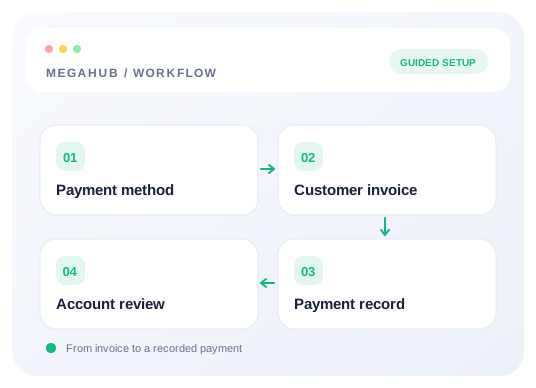
A customer record can carry a card for repeat business, so a dealer who ships every week is not re-reading a card number down the phone each time.
What is actually stored
A token issued by your payment processor, plus the brand, the last four digits and the expiry — enough to show "Visa ending 4242" and to charge against, and nothing else. The token is encrypted at rest and is useless to anybody who is not your processor.
That is not only a privacy preference — it is what keeps MegaHub, and by extension your brokerage's use of it, in the lightest PCI category. A system that handled raw card numbers would pull everyone using it into a far heavier compliance regime.
Tokens belong to one processor
A token is issued by the gateway that created it and cannot be charged anywhere else. If you move from one processor to another, cards saved under the old one stop being chargeable and have to be re-entered by the customer. Your old processor can sometimes migrate tokens for you — ask them before you switch, not after.
Read next
Check your progress
Review your setup
Use this checklist while following the guide. Your selections are for this reading session and do not change CRM settings.
0 of 5 complete
Continue exploring payments and billing
Setting up your payment methods
Which processors MegaHub supports, how to configure one, and how to decide who may use it.
6 min read →
Raising and sending an invoice
Invoicing an order, choosing which account it settles into, and invoicing on an agent's behalf.
6 min read →
How your MegaHub bill is worked out
What counts as a seat, what does not, and what happens when somebody leaves.
4 min read →